Why Every School Science Program Needs a Living Chemical Hygiene Plan
All grade levels
School science labs are places where curiosity comes alive through exploration and hands on learning. Alongside that exploration comes the responsibility to manage chemicals thoughtfully and consistently. One of the most important tools supporting that work isn’t found on a lab bench; it’s the Chemical Hygiene Plan (CHP).
Too often, the CHP is treated as paperwork that lives in a binder on a shelf. In reality, it should function as a living safety roadmap, one that protects students and staff.
What a Chemical Hygiene Plan Really Is
A Chemical Hygiene Plan is a written framework that outlines how chemicals are safely acquired, stored, used, and disposed of in laboratory environments. More importantly, it defines how people are protected from chemical exposure through training, procedures, and engineering controls.
Under OSHA’s Laboratory Standard (29 CFR 1910.1450), schools that use hazardous chemicals in labs are required to have a current, comprehensive CHP. While enforcement and applicability can vary by state, the expectation is clear: schools are responsible for managing chemical risk in a documented, systematic way.
Organizations like the National Science Teaching Association (NSTA) consistently emphasize that strong safety systems, including CHPs, are foundational to quality science instruction. Safety isn’t separate from learning; it enables it.
The Core Elements of an Effective CHP
A useful Chemical Hygiene Plan goes beyond a policy statement. At a minimum, it should clearly address the following areas:
Chemical Inventory and Labeling
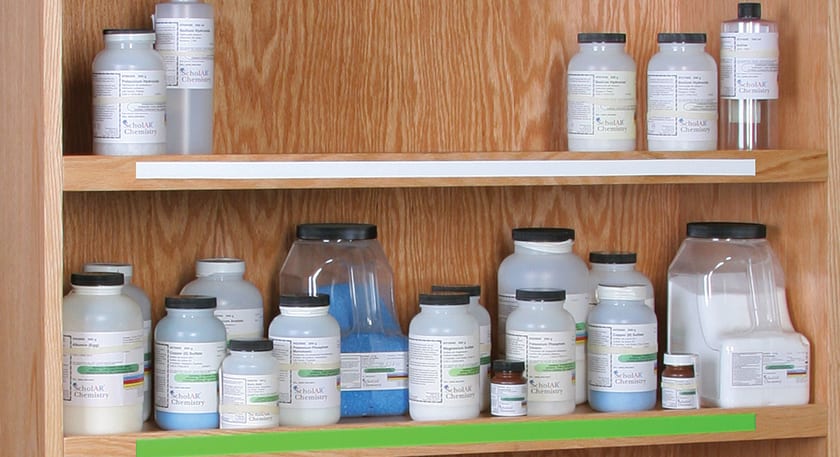
Schools must know what chemicals they have, where they are stored, and what condition they are in. An accurate inventory—paired with proper GHS labeling—helps prevent misuse, incompatible storage, and dangerous surprises during emergencies.
Standard Operating Procedures (SOPs)
SOPs translate safety expectations into action. They outline step by step procedures for handling, storing, and disposing of chemicals, and often extend to biological and physical hazards as well. Consistency here is key; clear procedures reduce guesswork and prevent accidents.
Exposure Controls and Protective Equipment
A CHP should define when and how PPE is used, including appropriate gloves, eye protection, and protective clothing. It must also address engineering controls such as fume hoods, eyewash stations, and safety showers—along with expectations for inspection and maintenance.
Emergency Response Protocols
Spills, exposures, fires, and other lab emergencies require fast, informed responses. A strong CHP spells out evacuation procedures, containment steps, and first aid actions so that staff aren’t making decisions in the heat of the moment.
Training and Safety Education
Training is not optional. Educators and lab staff must receive safety training when hired, when assignments change, and at least annually. Students also need age appropriate instruction that reinforces expectations and safe habits. This isn’t best practice—it’s a regulatory requirement.
Medical Consultation and Follow Up
When exposure incidents occur, employees must have access to medical consultation and evaluation. The CHP should clearly explain how and when this support is provided.
Why CHPs Matter More Than Ever in Schools
School labs face unique challenges. Budgets are tight. Staff turnover happens. Storage rooms often contain decades-old chemicals. Without a clear and current CHP, districts face risks.
Accident Prevention
Most lab accidents are preventable. Clear procedures, consistent training, and well maintained equipment significantly reduce the likelihood of injuries to students and staff.
Building a Culture of Safety
Perhaps most importantly, a CHP supports a culture where safety is visible and valued. When students see educators modeling responsible practices, those habits carry forward into higher education, careers, and everyday decision making.
Legal and Financial Protection
A documented, well implemented CHP demonstrates due diligence. In the event of an incident, it shows that the district has taken reasonable steps to follow recognized safety standards.
Making the CHP Work in the Real World
Implementation is where many plans fall short. These practices help move the CHP from paper to practice:
- Partner with the Chemical Hygiene Officer (CHO): Every district must designate a CHO. If one hasn’t been formally assigned, that responsibility defaults to district leadership. Science educators should know who this is and collaborate regularly.
- Review and Update Annually: Inventories, procedures, and equipment change. An annual review ensures the CHP reflects today’s lab practices rather than outdated ones.
- Inspect Safety Equipment: Eyewash stations, fume hoods, safety showers, and PPE should be inspected and documented as part of routine safety audits.
- Make Safety Instruction Routine: Lab safety shouldn’t be a one day lesson. Reinforce expectations regularly and document staff acknowledgment of CHP review.
Supporting Safer Science Classrooms
Organizations like Safer STEM and Ward’s Science provide professional learning, resources, and safety advocacy to help schools strengthen their chemical hygiene practices. From Chemical Hygiene Officer training to guidance on safer lab design, these supports help educators move beyond compliance toward true risk reduction.
A Chemical Hygiene Plan is about protecting people, not checking boxes. When thoughtfully developed and actively used, a CHP empowers educators to teach confidently, supports administrators in managing risk, and helps everyone experience science safely and responsibly.
Safe labs don’t happen by accident. They’re planned, practiced, and continually improved.
And that’s a lesson worth teaching every day.
Recommended Products
[StartProductBlock]

Safer STEM Resources
Through our partnership with Safer STEM, Ward’s offers powerful safety training, tools, and services that help K–12 schools meet legal safety requirements and create safer learning environments across all subjects and grade levels.
[EndProductBlock]
[StartProductBlock]
Chemical Inventory Management System
Educators and staff can log in to their home page and set up a database to track inventory across different locations, such as buildings, classrooms, and even cabinets. Users can add, modify, or delete chemical-inventory items and view information about each chemical.
[EndProductBlock]
[StartProductBlock]

Comprehensive Safety Supplies
Your one-stop shop for chemical safety. Build a safer science lab with protective apparel, shields, emergency equipment, spill control, first aid, and more.
[EndProductBlock]
