Surgical Aseptic Technique: A Core Skill for Future Healthcare Professionals
High School
Healthcare students are often eager to practice the hands-on skills they associate most with patient care, from taking vital signs and assessing patients to assisting with clinical procedures.
But before many of those interactions can safely begin, students must first learn how to prevent contamination.
For students preparing for healthcare careers, surgical aseptic technique is one of the most important patient-safety skills they can develop. Learning how to scrub in for surgery, put on sterile gowns and gloves, work within a sterile field, and recognize when sterility has been compromised helps reinforce a core lesson of healthcare: small details matter, and even a minor lapse in technique can create an opportunity for microorganisms to spread.1
Because students learn aseptic technique through practice as much as instruction, they need opportunities to do more than read about the steps. They need to perform them, identify contamination risks, learn from mistakes, and build confidence through repetition.
What Is Surgical Aseptic Technique?
Surgical aseptic technique, sometimes called sterile technique, refers to practices used to prevent microorganisms from contaminating areas, equipment, or supplies that must remain sterile during an invasive procedure.
It involves much more than putting on a pair of sterile gloves.
Key surgical aseptic technique skills include:
- Perform proper surgical hand antisepsis
- Put on surgical attire and personal protective equipment correctly
- Gown and glove without contaminating sterile surfaces
- Distinguish between sterile and nonsterile areas
- Maintain a sterile field once it has been established
- Recognize a break in sterile technique and respond appropriately
Each step matters because sterile technique is only effective when the entire process is followed consistently.
That makes infection prevention education an important part of healthcare career preparation, even for students who may ultimately enter very different clinical professions.
There’s More Science Behind “Scrubbing In” Than Students May Realize
Even everyday handwashing relies on science: soap and friction lift oils, dirt, and microorganisms from the skin so they can be rinsed away. Surgical hand preparation takes infection prevention further, using specific antiseptic products and prescribed techniques before sterile gloves are donned.
To students, scrubbing in can initially seem like an elaborate version of handwashing.
It isn’t.
Human skin naturally carries microorganisms. Some are acquired through contact with people, objects, and surfaces, while others normally live on or within the skin. Surgical hand preparation is designed to substantially reduce their presence on the hands and forearms before putting on sterile gloves.2
That extra preparation matters even when you wear gloves.
Sterile gloves provide an important barrier, but they do not eliminate the need for surgical hand antisepsis. Gloves can be damaged or punctured during procedures, sometimes without the wearer realizing it. Reducing microbial burden on the hands adds another layer of protection.
The details of scrubbing in for surgery also illustrate how easily contamination can occur. Depending on the protocol and products being used, students must pay attention to areas around the fingers and nails, follow a prescribed sequence, maintain proper hand positioning, apply antiseptics correctly, dry appropriately, and avoid touching nonsterile surfaces afterward.
Suddenly, “washing your hands” becomes an exercise in microbiology, attention to detail, sequencing, and patient safety.
Why Sterile Technique Training Needs to Be Hands-On
An instructor can demonstrate proper surgical gowning and gloving. Students can watch a video explaining hand hygiene. They can even memorize every step of a surgical scrub.
But real learning begins when they do it themselves.
What happens if a student finishes scrubbing and instinctively touches something? Can they put on a sterile gown without contaminating it? Can they glove correctly while keeping the appropriate surfaces sterile? Will they notice when their hands move into the wrong position?
These are procedural skills. Students need opportunities to practice the sequence while thinking about what is sterile, what is not, and where contamination could occur at every step.
Repeated practice can also help students become more comfortable with unfamiliar procedures. Instead of encountering sterile techniques for the first time in a clinical environment, students can begin developing the confidence, habits, and attention to detail those environments require while they are still in the classroom.
That makes hand hygiene training, surgical gowning and gloving, and sterile-field awareness valuable components of a Healthcare CTE curriculum.
Turn “Scrubbing In” Into an Experience
One way to make these concepts more tangible is to turn sterile preparation into an active classroom experience.
The Apprentice Doctor® Surgical Aseptic Technique Activity allows students to practice the preparation process used before simulated surgical procedures. It guides them through hand hygiene (soap, water, and alcohol rub), donning and doffing clean and sterile gloves (open, closed, and plunge methods), changing into OR attire, surgical gowning, PPE management, and lymph node palpation. The supplies are even packaged similarly to those used in a surgical setting.
Rather than simply telling students sterile technique requires precision, instructors can show them why. As students move through each step, they must pay attention to what they touch, follow established procedures, and remain aware of contamination risks. What might seem like a routine checklist becomes a practical application of infection-prevention principles.
That creates opportunities for instructors to reinforce several concepts at once:
- The relationship between microorganisms and infection prevention
- The purpose behind surgical hand preparation
- Proper use of gowns, gloves, and protective equipment
- The importance of following protocols carefully
- Personal responsibility for maintaining a sterile environment
It also helps connect classroom science with the expectations students may encounter in healthcare careers.
Extend the lesson: Make missed areas visible
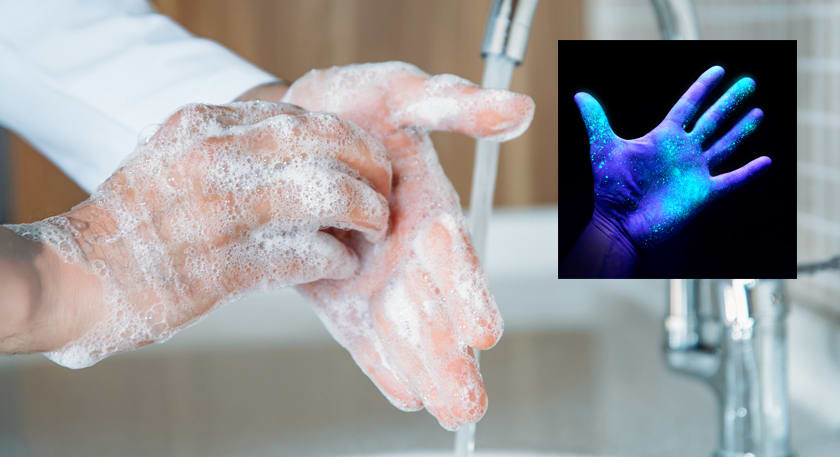
Want students to put their technique to the test? The Apprentice Doctor Fluorescent Lotion can make contamination risks easy to see. Students apply a small amount of lotion, practice handwashing, then use a UV light to reveal any areas they missed. The activity can also reinforce proper glove removal. If fluorescent lotion transfers to a student’s hands during doffing, it provides immediate visual feedback that their technique needs improvement.
It’s a simple way to make the invisible visible, giving students an instant “aha” moment about where technique can break down and why infection prevention matters.
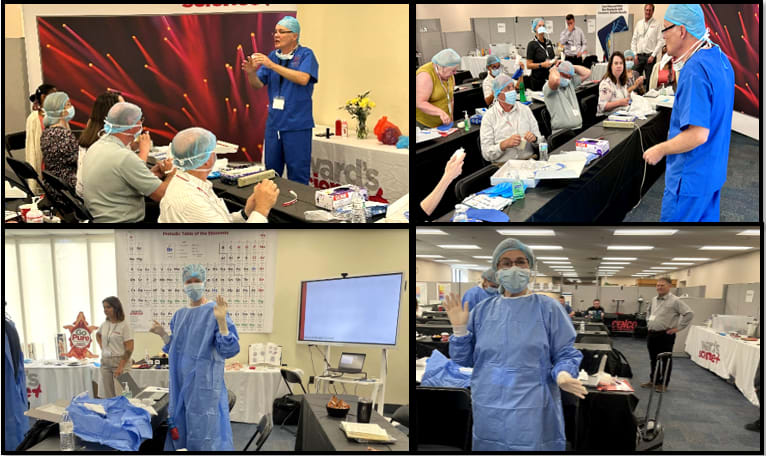
Ward’s Science Scrubs In
The Ward’s Science team got a firsthand look at the activity during a recent sales conference. Even as adults, the team members became absorbed in the exercise and gained a new appreciation for the focus, precision, and preparation proper sterile technique requires. For students, that same realism can make learning stick while building confidence for future healthcare roles.
Build Good Habits Before Students Enter Clinical Settings
Surgical aseptic technique helps students develop the habits, attention to detail, and patient-safety mindset expected in clinical environments.
Practicing these skills in the classroom gives students an opportunity to build confidence before applying them in real-world healthcare settings.
Ready to get your students scrubbing in?
[StartProductBlock]
Shop the Apprentice Doctor® Surgical Aseptic Technique Activity.
Bridge classroom learning and clinical practice with a hands-on aseptic technique activity that helps students develop critical surgical preparation skills.
[EndProductBlock]
1. Association of periOperative Registered Nurses (AORN). AORN Guideline in Focus: Sterile Technique in the OR. https://www.aorn.org/article/aorn-guideline-in-focus--sterile-technique-in-the-or 2. Centers for Disease Control and Prevention (CDC). Clinical Safety: Hand Hygiene for Healthcare Workers . https://www.cdc.gov/clean-hands/hcp/clinical-safety/index.html
