Chinampas to Hydroponics Activity: Lessons from Ancient Agriculture
Middle & High School

When most students think about agriculture, they picture tractors, fields, greenhouses, or maybe even futuristic vertical farms. But some of the most creative agricultural ideas are actually thousands of years old.
Your students may be amazed to learn that one of the coolest examples comes from the Valley of Mexico, where people developed an ingenious farming method called chinampas.
Often nicknamed "floating gardens," chinampas weren't actually floating around like giant rafts. Instead, farmers built productive growing plots in shallow lake environments using layers of vegetation, mud, and soil. Networks of canals surrounded the plots, providing easy access to water and helping support a highly productive agricultural system.
The Aztecs became famous for using chinampas around the city of Tenochtitlan, but the technique reflects a much longer tradition of agricultural innovation in the Valley of Mexico and broader Mesoamerica.1 Turns out, some farming innovations have really deep roots!
So why should today's Ag Science students care about an ancient farming technique?
Because chinampas help us explore a question that farmers, scientists, and engineers are still trying to answer today:
How Do We Grow Food When Resources Are Limited?
Growing plants sounds simple until you start thinking about everything plants need.
- Where will the water come from?
- How will roots get nutrients?
- What kind of growing environment will help plants thrive?
- How can available land be used efficiently?
For thousands of years, farmers have solved these challenges in creative ways. We’re going to float chinampas to the top of the list.
Rather than fighting against their environment, growers worked with it, creating a system that made productive use of shallow lake areas. Fast forward to today, and agriculture faces a new set of challenges. In many places, growers are looking for ways to conserve water, maximize growing space, and produce food efficiently year-round.
That's where innovative technologies like hydroponics come in!
Ancient Ideas, Modern Solutions
Here's where students may be surprised: chinampas and hydroponics tackle similar challenges in very different ways. Hydroponic systems grow plants without soil, delivering nutrients through water. Chinampas, on the other hand, used soil-based growing beds built within a water-rich environment.
Different technology. Different approach.
But both systems were designed with the same goal in mind. Growers had to determine how to provide water, nutrients, support, and the right conditions for healthy growth.
That's what makes them such a fascinating comparison. Whether you're studying an ancient chinampa or a modern hydroponic farm, you're exploring the same big idea:
How can we create the best possible environment for plants to grow?
Today's hydroponic systems answer that question in a variety of ways.
- NFT (Nutrient Film Technique) systems keep a thin stream of nutrient-rich water flowing past plant roots.
- Bucket systems support larger plants individually.
- Vertical hydroponic systems grow upward instead of outward, making the most of limited space.
Each design is different, but all are examples of agricultural engineering in action.
Let Students Become Agricultural Engineers
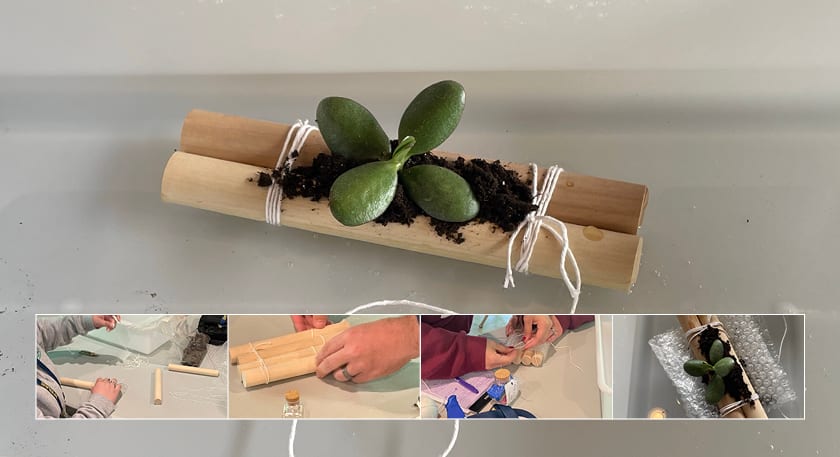
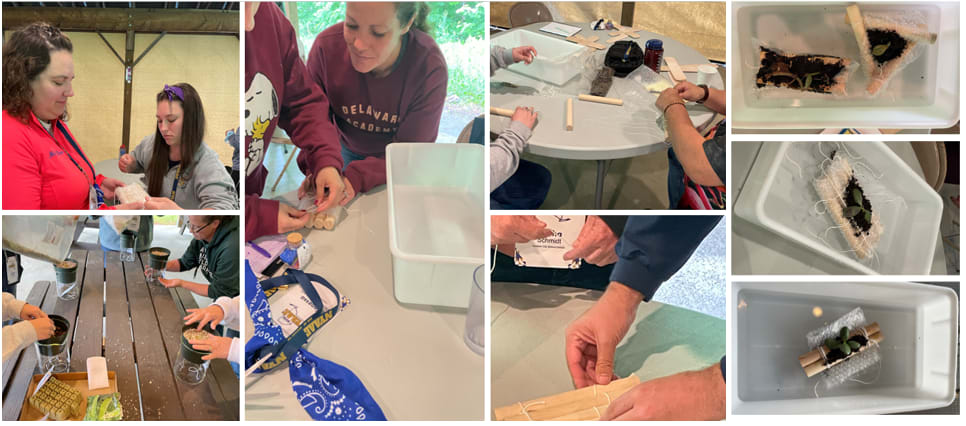
Reading about innovation is one thing. Designing it yourself is even better…and more fun! That's exactly what students do in Ward’s Science Chinampa Engineering Challenge: Ancient Agriculture Meets Modern Hydroponics. Instead of following step-by-step instructions, student teams tackle a real-world agricultural challenge.
Their mission? Design a growing system that stays stable, supports seeds and growing media, and provides access to moisture. The best part? Every solution is different. As students test, observe, and improve their designs, they're thinking like agricultural engineers and plant scientists.
Ready to Get Growing?
Download the Teacher & Student Guide
Recommended Products
[StartProductBlock]
CropKing 8-Bucket Bato Hydroponics Bundle
Designed for tomatoes, peppers, cucumbers, and other fruiting crops. Explore nutrient management, irrigation, and controlled-environment agriculture while growing large plants from seed to harvest.
[EndProductBlock]
[StartProductBlock]
CropKing Vertical NFT System Hydroponics Bundle
Space-saving vertical NFT hydroponic system that maximizes growing capacity in a compact footprint. Ideal for leafy greens and herbs, with curriculum and classroom-ready components for hydroponics and controlled environment agriculture
instruction.
[EndProductBlock]
[StartProductBlock]
CropKing NFT4-6 Hydroponics Bundle
Channel-based NFT growing system featuring six production channels for year-round cultivation of leafy greens, herbs, edible flowers, and mini tomatoes. Includes curriculum, propagation supplies, and nutrient management tools for hands-on learning.
[EndProductBlock]
[StartProductBlock]
CropKing Desktop Hydroponics Bundle
Compact desktop NFT system designed for small-scale growing, classroom demonstrations, and experimentation. Includes everything needed to grow fresh leafy greens while introducing students to hydroponic production concepts.
[EndProductBlock]
